Introduction
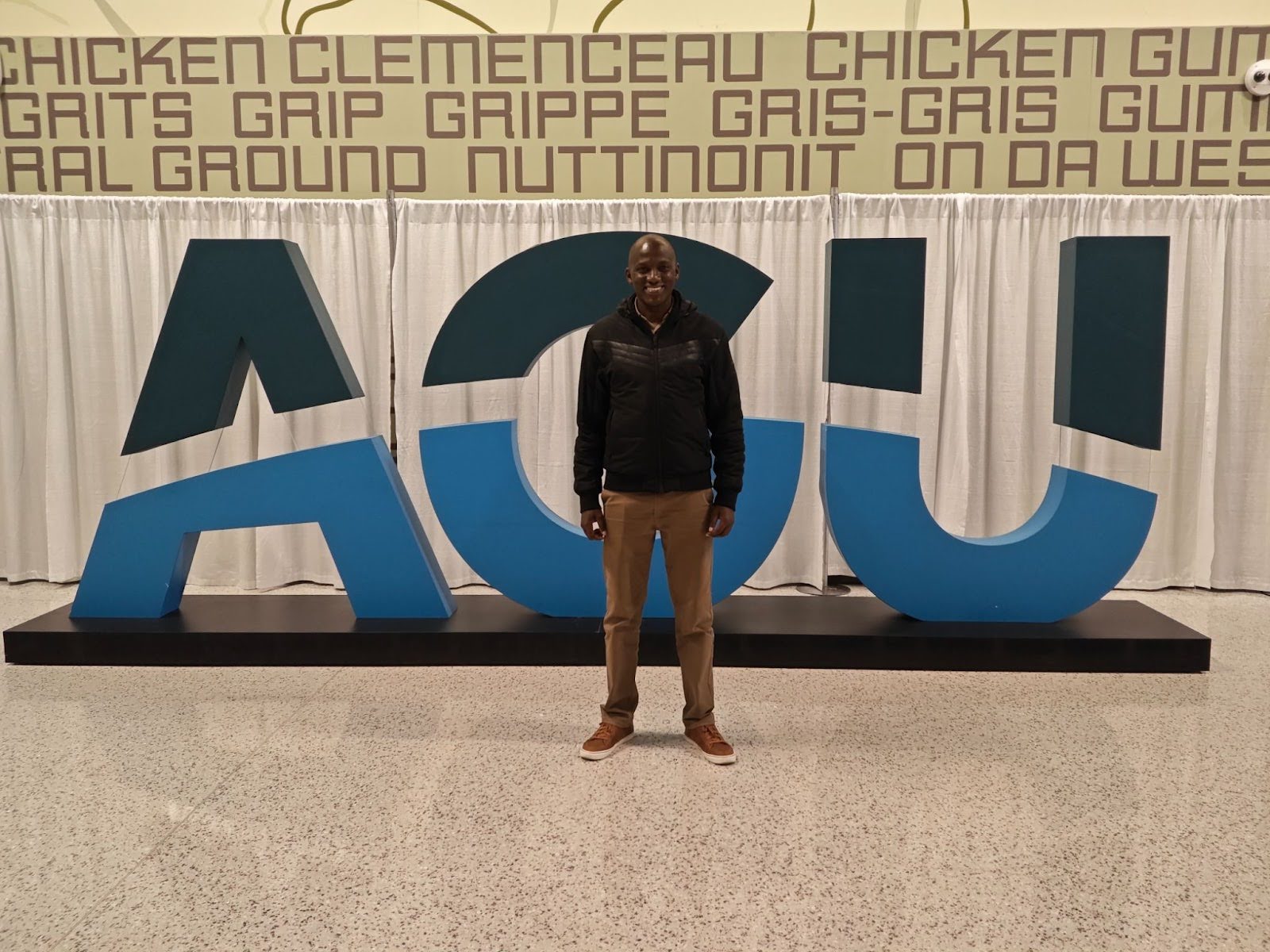
Between 15 and 19 December 2025, I was privileged to attend the American Geophysical Union Fall Meeting 2025 (AGU 25) in New Orleans Louisiana (NOLA). The AGU Fall Meeting is the largest gathering of earth and space scientists in the world and brings together 30,000+ attendees from 100+ countries to share their research and connect with one another. The meeting’s theme was “where science connects us”. In this blogpost I highlight my travel and AGU experience, and the valuable lessons I learnt.
Weekend in New Orleans
Until the 11th of December 2025, I had never lived through a day that embodied Murphy’s Law more perfectly. My departure for New Orleans served as a stark reminder of the planning fallacy. The journey was defined by a high-stakes race against time: a morning spent navigating administrative hurdles in Nyeri – including a four-hour ordeal to open a bank account – followed by a harrowing transit to Nairobi that coincided with the Jamhuri Day holiday traffic. Despite the systemic collapse of my original itinerary, a series of quick, tactical manoeuvres – including grabbing a boda-boda ride to evade traffic – allowed for an arrival at the airport with more than enough time to spare.
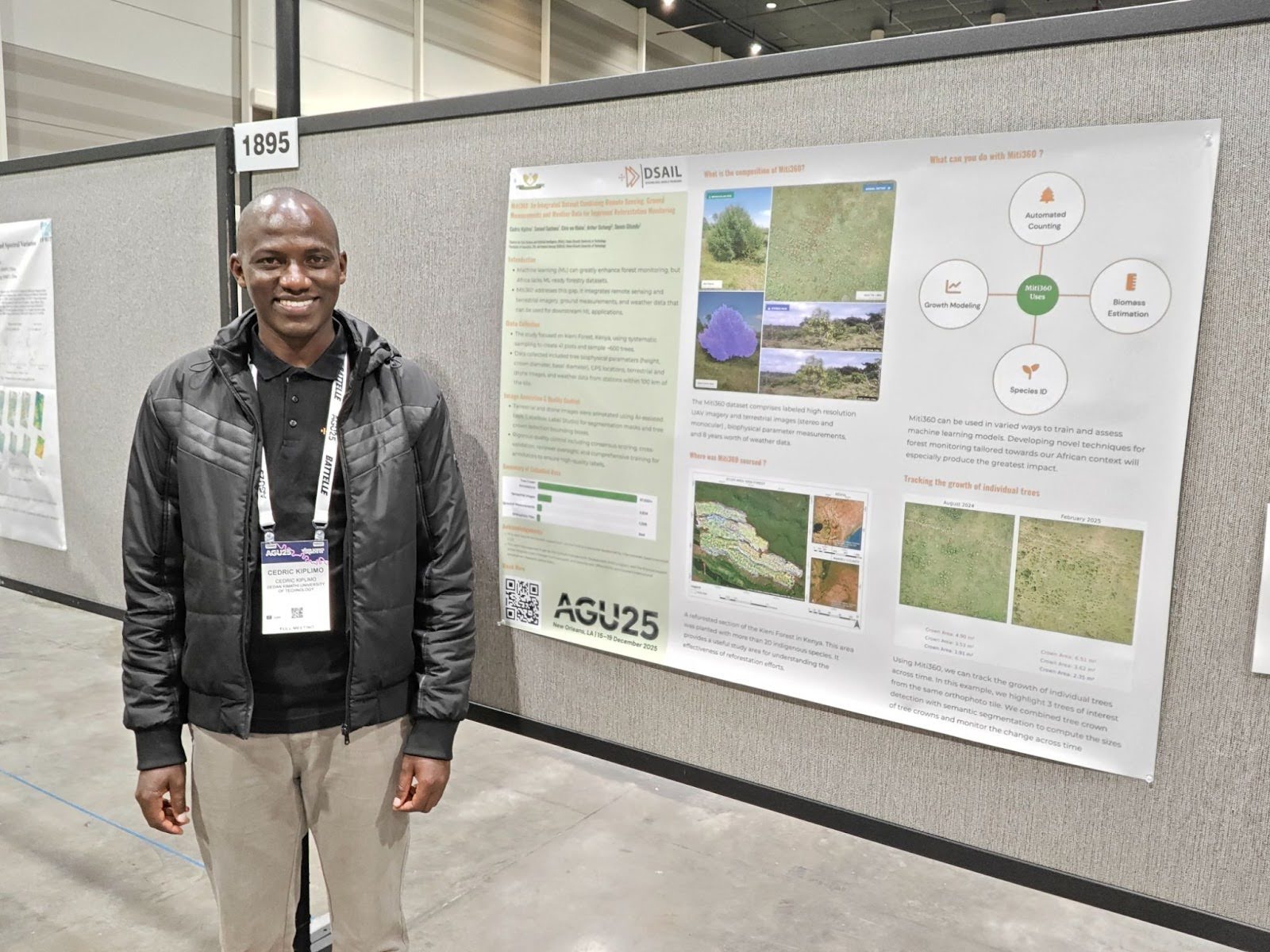
This frantic prelude gave way to a 24-hour transit through Dubai and Houston, eventually ending in an unexpectedly peaceful first night in the city, not too far from the graceful banks of the Mississippi. That quiet was short-lived because Saturday 13th December marked my first misfortune in New Orleans – having to trek miles through the city caused by an outdated Google Maps listing and a lack of connectivity. I was exhausted by the time I got to the house nearly two hours later and was happy to enjoy a hearty meal and take a nap afterwards.
Once I was sufficiently rested, I decided to take a walk along the banks of the Mississippi, an experience that my host had told me would be enchanting. From my home on Mazant Street, a short walk up the street and across the railway line led me straight into the Crescent Park, a serene green space that offers a breathtaking view of the Mississippi. As the sun set in the west, it bathed the Mississippi in gold and framed the city skyline in dramatic, towering silhouettes. It was an hour of pure bliss, one to be grateful for after what would have otherwise been a Saturday to never remember. On my walk back to the house, it was quite nice to have strangers smile at me and say “hello” on the streets of New Orleans.
By Sunday, December 14th, the tax of navigating an unfamiliar infrastructure began to compound. Attempting to bypass the expense of rideshare apps, I opted for New Orleans’ public transit – a decision rooted in my desire for a more "textured" travel experience. For a mere $15, the RTA Le Pass promised a week of seamless movement via bus and streetcar.
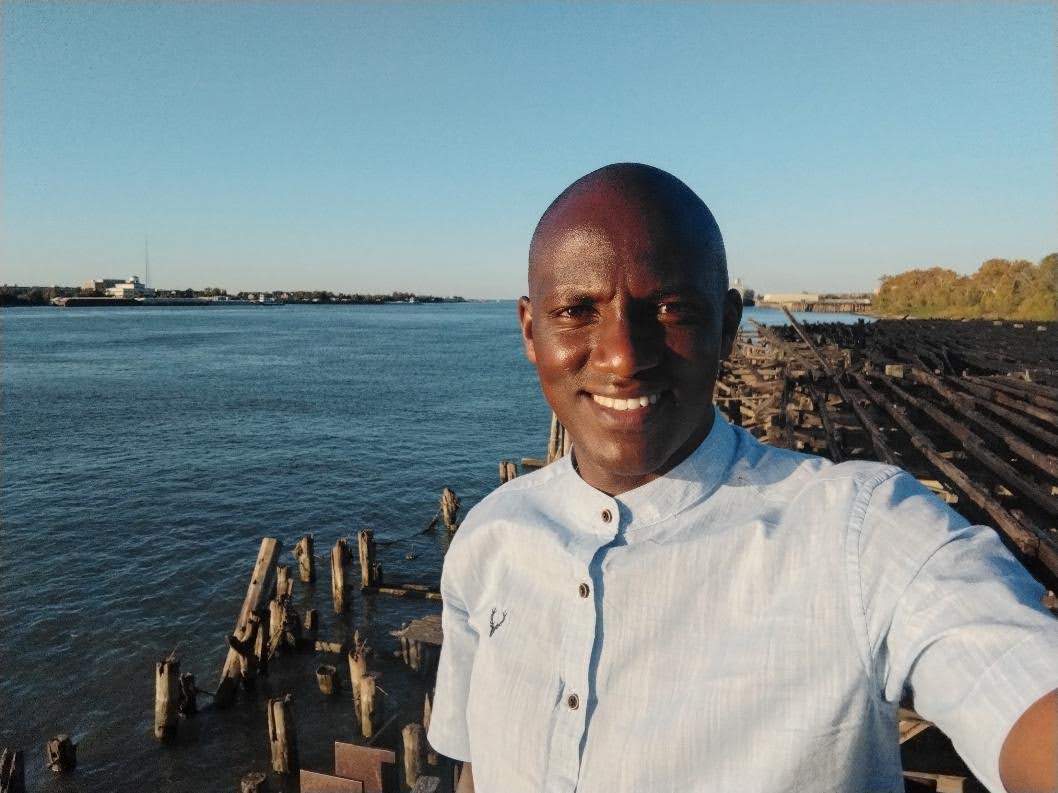
Despite a smooth transfer from St. Claude Avenue to the Ernest N. Morial Convention Centre, my aging smartphone became the single point of failure. It didn’t support U.S. carrier frequencies and failed to connect with the convention centre’s Wi-Fi 6 network. This digital isolation meant I couldn't retrieve a QR code required for early registration, forcing me to concede to the legendary mile-long queues of Monday morning.
Another misfortune (the second in two days) occurred on the return trip: having closed the transit app, I found myself unable to retrieve my digital pass (which I would need to show when boarding a bus) without an internet connection. Confronted with one metro bus driver’s rigid "rules are rules" stance and temperatures dipping below 5°C, I was forced into a two-mile trek back to my Airbnb in the biting cold. The professional takeaway was clear: for the international traveller, a flagship device is not a luxury, but a critical piece of infrastructure required to maintain one’s autonomy in an increasingly digitized world.
Connecting through Science
My first two days in NOLA had been very eventful, and I was eager to get started with AGU 25 on Monday morning. Just to redeem myself following the nasty experience the previous day, I chose to take the metro back to the convention centre. All went without a hitch, and I arrived to find the registration queue snaking many hundreds of metres along the foyers. Once I had completed the registration process, I opened the AGU Events app to find the oral and poster presentations I had selected to attend.
The AGU Fall Meeting attracts 30,000+ attendees, there are usually hundreds of sessions and thousands of presentations taking place. The app makes it easy to choose which ones to attend, and it’s always a good idea to begin with those presentations in the same session as your own because they will usually be closely related.
In my case, I went the extra mile of finding fellow Kenyans presenting at the conference by simply searching “Kenya” on the app. I find this a good idea since interacting with a fellow countryman/woman can make the AGU experience less daunting. This was a lesson I learnt from my 2024 experience. I succeeded in identifying a few Kenyans in the program although in the end I did not meet any of them because of time constraints. Additionally, the convention centre itself did not lend itself to meeting people easily because of its footprint – it was more than one kilometre long and spanned about four floors!
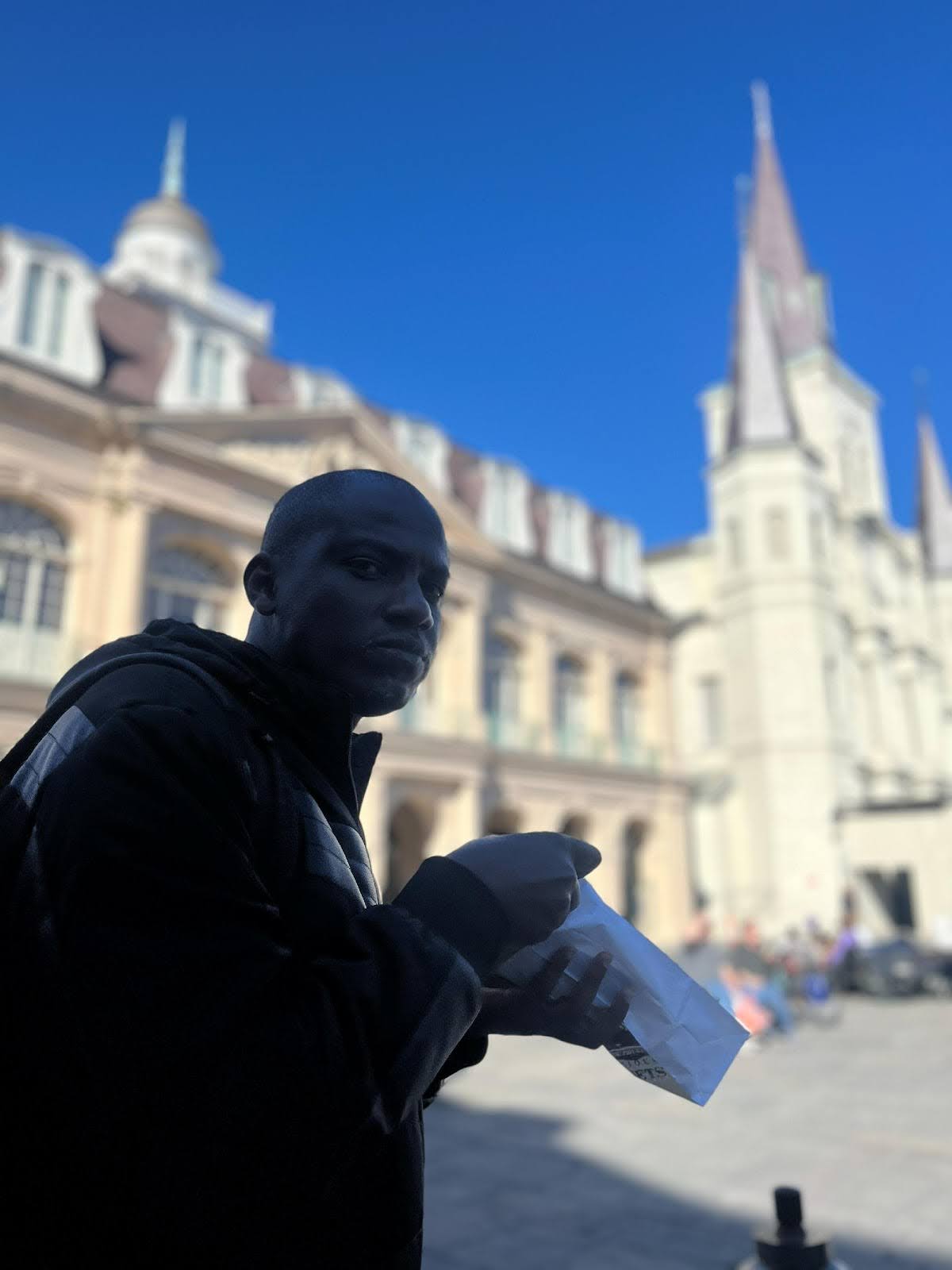
An excellent way to network at AGU is by attending the poster session. Posters are typically presented by graduate students – both PhD and masters – although it is not uncommon to also meet postdocs and faculty members (even professors) presenting. My plan went somewhat like this – I would use the app to identify poster presentations of interest, note the essential poster information like presenter and board number, walk to the poster location in the poster hall, and begin to ask the presenter any questions I might have or just have a general chat about their research.
Some posters will be crowded but most of them will have one or two people looking curiously at them, which provides an excellent opportunity to have an in-depth conversation with the presenter. In my case, the posters of interest usually highlighted research projects that had significant overlap with my research or future directions I was thinking of exploring. I always made the point of reading their abstracts on the app before heading to the poster. Doing this would help me to maximise on the time I spent with each presenter.
I found this to be an extremely useful tactic because there are usually more posters of interest than there is time available to speak with the presenters. Further, you may not find the presenter at the poster at the time you visit. AGU poster sessions are three and half hours long, but most presenters tend to be at their posters for one to two hours at most, which they indicate by pinning a note on the board stating what time they will be at the poster. All this adds to the complexity, which necessitates being efficient and planning ahead to make the most of the sessions.
Key Takeaways
There were two key takeaways for me from AGU 2025 – valuing the contributions of my research and the importance of community. Being at an AGU Fall Meeting, which is usually demographically dominated by white and Asian people, can leave with an impostor. One psychological hack I have learnt to deploy is to focus on the science and ignore the demographics. As long as I can interrogate the science being presented and understand it to a comfortable level, I will label the demographics as unimportant. Remaining objective like this is what helps me to formulate the relevant questions I would like to ask.
While attending the poster sessions, I would often notice the similarities between the research I do at DSAIL and those being done at some of the most prestigious institutions. I often like to simply think of this as me being a part of the critical mass pushing to answer certain research questions and that the work I do is contributing to moving some needles.
Halfway through the conference, I had the chance to attend the Aspen Global Change Institute’s (AGCI) 10-year celebrations of being at AGU on behalf of my PhD advisor Prof Ciira Maina. At its heart, AGCI is a multi-disciplinary community of scientists advancing global change through collaborative effort. Being at that networking event opened my eyes to the opportunities for impact that coming together as multi-disciplinary teams can open. This was a gathering of scientists from various disciplines who regularly gather to discuss how the great problems we face as a globe can be solved. A part of me was deeply persuaded that something like that ought to be happening in my homeland. After name-dropping my advisor’s name, I made new connections that will hopefully lead to future collaborations.
Final Thoughts
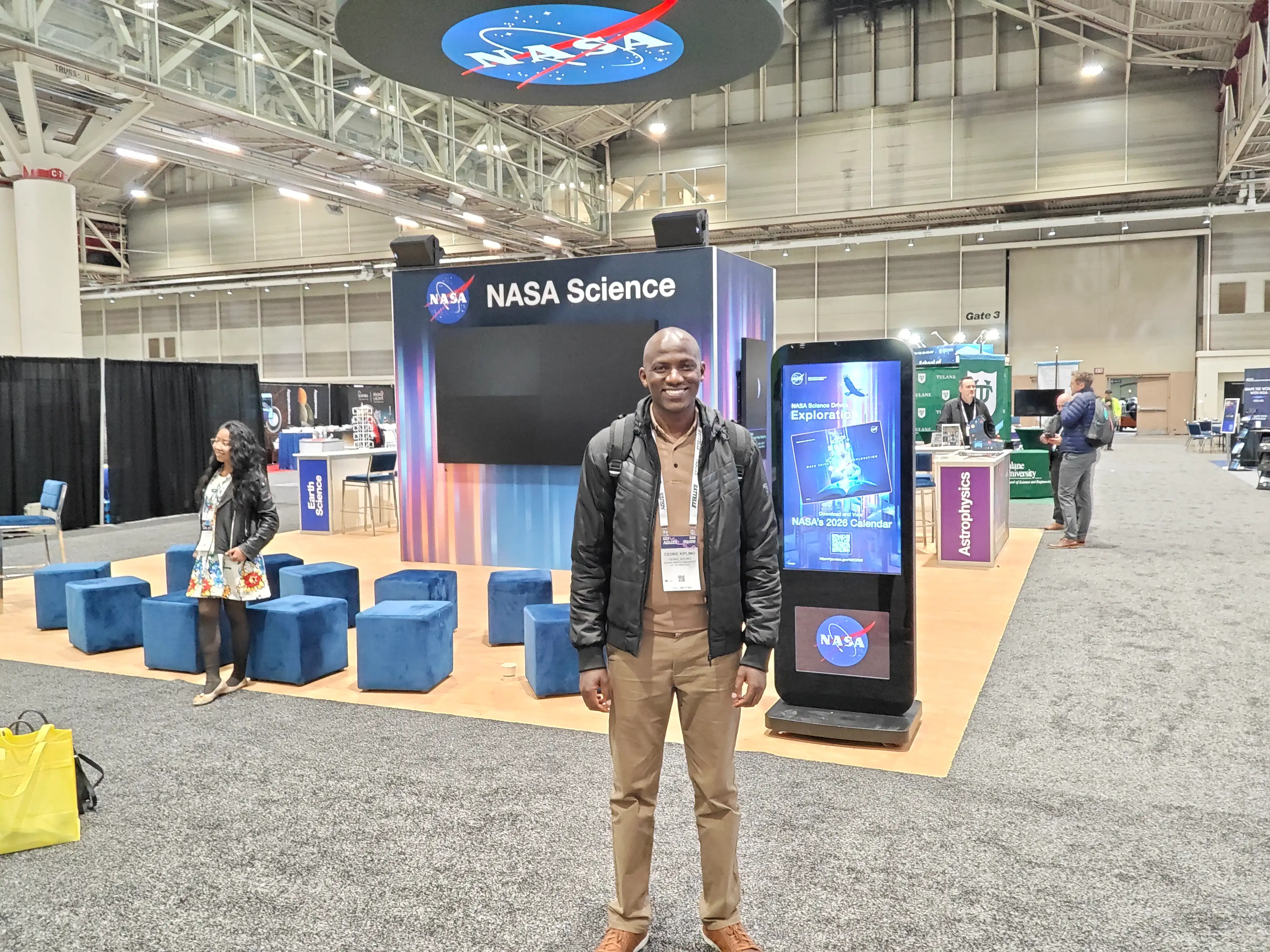
Although I did not meet any Kenyan at AGU 25, it was a pleasure to meet familiar people I had interacted with at AGU 24. I spent the late morning and early afternoon hours of the final day touring the nearby parts of the city with Wulan, an Indonesian friend from AGU 24. We toured the famous French Quarter (including a stop at the French market), ate some delicious New Orleans treats like beignets, and took lots of pictures for memories.
I love opening myself to the opportunity of meeting new people and making new friends because even weak ties have been shown to be very powerful. At AGU 24, I met a graduate student from my neck of the woods, struck a friendship with him and continued to keep in touch. When I left NOLA on December 19th, I flew up to Northern Virginia where, believe it or not, he hosted me for the rest of my stay in America.
Gallery